
In many regional publishers, ad bookings still live in a shared spreadsheet – or in several. Planners reserve positions by phone or by calling across the office, the spreadsheet is updated later, and layout finds out on production day that two customers expect the same page.
Large publishing systems solve this, but they are often too heavy and too expensive for regional titles, free sheets and magazines. This guide shows what a lean system for ad booking and flat planning needs, and how to move to it without disrupting production.
Why the spreadsheet stops working
- Double bookings: two planners reserve the same position because the file was not up to date.
- Verbal requests: reservations agreed on the phone never reach the file.
- No overview: nobody sees the utilisation of an edition until the week is almost over.
- Disconnected layout: the flat plan is built separately, so changes in ad sales arrive late.
What an ad reservation needs to capture
A good reservation record is short but complete: customer and contact, calendar week and edition, position and format, the responsible planner, and the status from request to confirmed booking. Linked to the customer record, it also builds a history of calls, meetings and bookings – useful for the next sales conversation.
A booking calendar with live utilisation
The calendar view by week shows all bookings per edition and position at a glance. A colour per planner and filters by location and medium help each team find its own work. Live utilisation – booked, free and overbooked – turns the calendar into a steering tool: sales sees where space is still available, and management sees the trend over the year.
The flat plan: where sales and newsroom meet
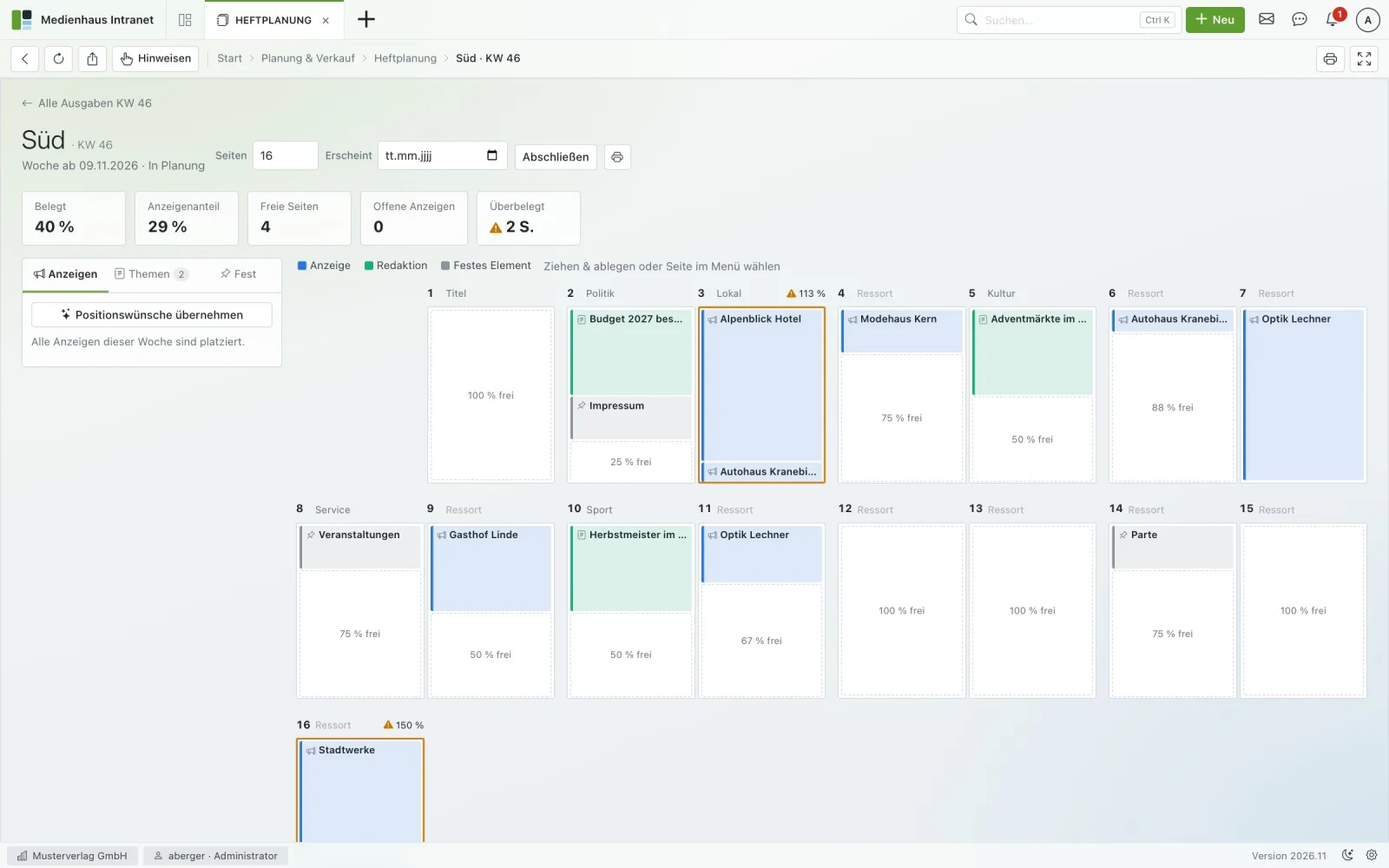
The flat plan – the page plan of an edition – is where ad sales and the newsroom come together. In a connected system, confirmed reservations appear on the plan automatically, and stories from the editorial meeting are dragged onto the pages next to them. Page fill, ad share and free pages are always visible, and positional requests from customers are respected early instead of being fixed on production day.
Special supplements and joint campaigns
Special supplements, anniversaries and joint campaigns follow their own process: an enquiry, an offer, follow-ups and finally a commitment. A Kanban board from enquiry to commitment makes this pipeline visible to sales and editorial at the same time, so content and ad space are planned together.
How to make the switch without disrupting production
- Clean up master data: editions, positions, formats and planners.
- Import existing reservations from Excel or CSV, so the calendar is complete on day one.
- Run one edition in parallel and compare the flat plan with the old process.
- Switch all editions once planners trust the calendar and layout works from the new plan.
Teams that also move time tracking, leave and internal news into the same workplace gain the most – read more in our guide to intranets for media companies.
Frequently asked questions
What is a flat plan in publishing?
A flat plan is the page plan of an edition. It shows which ads and stories go on which page, how full each page is and how much space ads take up.
How do we prevent double bookings of ad positions?
By booking in one shared system with a calendar per week and edition and live utilisation, instead of updating a spreadsheet after the fact.
Can we import our existing ad bookings?
Yes. Reservations, employees and departments can usually be imported from Excel or CSV, so the booking calendar is complete from the first day.
Do we need a large publishing system for ad booking?
Not necessarily. Many regional publishers, free sheets and magazines are well served by a lean system that combines ad reservations, the flat plan and editorial planning with their daily office work.
Related reading
Ad bookings under control.
Booking calendar, live utilisation and flat plan in one workplace – free for 30 days.